

A teacher with Tuesday’s photocopies does not need another generic “word puzzle” file. They need this week’s list turned into pages a student can finish in class, with an answer key the teacher trusts. A KDP publisher with the same list needs a different promise: enough pages for Look Inside, keys that line up, and titles that say what unit the words came from.
Word Scramble is a puzzle maker for the plain unscramble job: one scrambled row per word, one blank answer line underneath, and a solution export that mirrors the puzzle file. The production question is how it turns one spelling or vocabulary list into worksheets that match the listing, and when the same list should become a book instead.
The list is the unit of work
The asset is the list file: fifteen words from the reading unit, twenty states for a geography week, or a custom .txt you reuse every fall. Everything else is layout on top of that list.
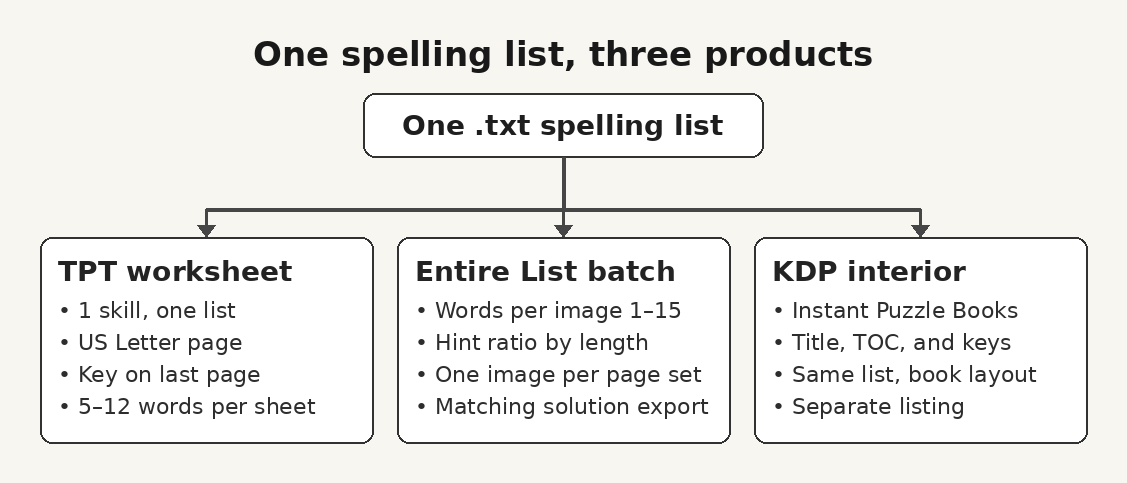
Keep Entire List on (the default) for classroom work. With it on, Word Scramble walks the whole file and emits one image per page batch at your words per image setting (1 through 15, default 5). Turn it off and you are in quantity mode: useful for sampling, less useful when the buyer paid for “Unit 4 list, complete.”
That distinction matters on Teachers Pay Teachers. A listing that says “20 spelling words, full key included” should mean the buyer gets all twenty, not a random ten pulled from the same file. Entire List is how you keep the title true.
For the wider picture, see turn one word list into multiple puzzle products. Scramble is the step where the student rebuilds the spelling from its letters. Keep scramble pages in a spelling pack; keep word-search pages in a recognition pack; do not merge both jobs into one thumbnail unless the title says so.
What the worksheet buyer sees
On TPT the preview must show three things: scrambled letters, room to write the answer, and proof that a key exists. Word Scramble ships puzzle and solution as paired exports; the commercial work is placing the key where a teacher can grade fast (usually a clean last page, not a thumbnail-sized solution grid).
Words per image sets density. Five words per page reads like a weekly spelling sheet; twelve or fifteen on one US Letter page suits review packets. The control runs to 15; for longer lists, split across pages and keep the type readable.
Hints are the other lever. They are off by default. When you turn them on, Word Scramble reveals letters by ratio (one letter per N letters in the word), and only after the word clears a longer than threshold you set. Short words stay fully blank; long words get partial reveals without dumping the answer. That is how you run “support list” and “cold test” from one file: duplicate the export with hints on for one PDF and off for another, still Entire List, still the same twenty words.
Random word order and random set order are independent switches. For a fixed weekly list you usually leave both off so page three still matches the study guide. For a mixed review book you might scramble order so repeat buyers do not memorize sequence.
For step-by-step screens, see getting started with Word Scramble.
When the deliverable is a book, not a worksheet
If the buyer is Amazon, the list still starts the job but the deliverable changes. They want page count, a title page, numbered puzzles, and answer keys in a rear section or linked footer, rather than a single PNG dropped into Canva.
Instant Puzzle Books is included with every paid edition and is the usual book assembler for scramble interiors built from the same Entire List pass: margins, trim, table of contents, and footers that point each puzzle at its solution page. Puzzle Book Studio is the live editor when you want to tweak titles, numbering and layout page by page.
For TPT, upload the worksheet itself rather than the KDP interior PDF: keep the list and the paired key; drop book chrome, series pages, and padding added for print signatures.
Commercial use of finished worksheets and books is stated on the homepage: you may sell the books, worksheets, and packs you make to your own readers and customers. You remain responsible for the words in your list and for each marketplace’s content rules.
Plain scramble and the other scramble looks
Shoppers conflate “scramble” types because the catalog groups them. Word Star, Word Squares, and Just Five Words also start from lists; they ask different work on the page. If you are choosing among those looks, see Word Star vs Word Squares vs Just Five Words. This guide covers plain unscramble rows.
Building a full spelling-week pack (scramble plus recognition plus ladder sheets from one list)? See spelling worksheet maker.
What Word Scramble exports
Word Scramble is the module: your list, words per image 1–15, optional length-based hints, Entire List for a full class file, matching solution images, and the book builders when the channel is KDP instead of a single printable page.
Other puzzles you might like
Want clue-led review from the same list? Word search with clues covers clue-led word searches built from a vocabulary list.
For vocabulary word searches that hide words instead of unscrambling them, TPT vocabulary word search worksheets explains the worksheet promise on that puzzle type.